
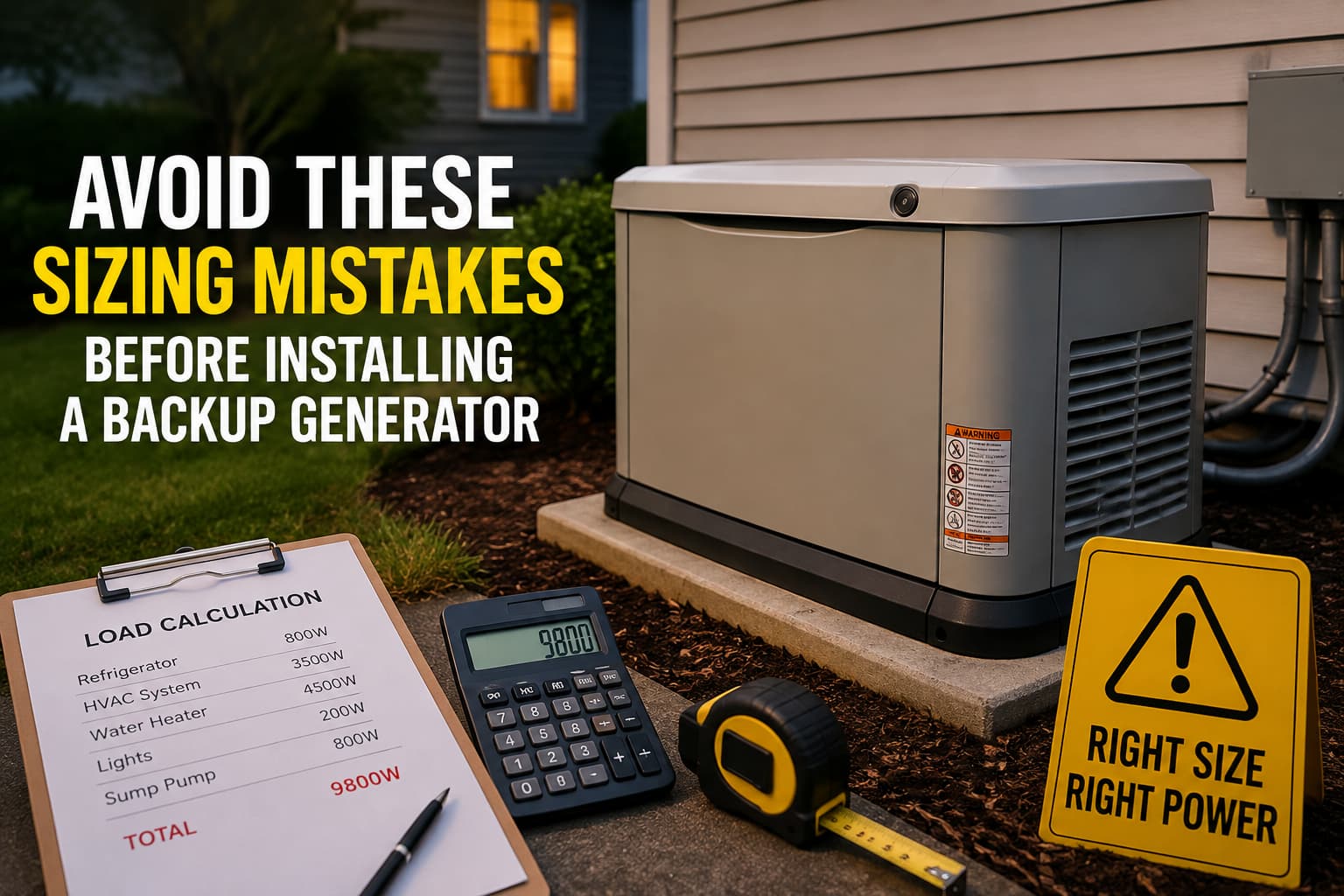
Avoid These Sizing Mistakes Before Installing a Backup Generator
Generator size plays a key role in keeping essential systems running safely during outages. Incorrect sizing can cause overloads, wasted fuel, and unnecessary costs. Proper load planning, fuel selection, transfer-switch setup, and professional installation help ensure reliable backup power.
When choosing generators for backup power, homeowners must consider more than price or advertised wattage. Appliances, HVAC systems, and other essential devices have different power demands, including higher startup needs. Accurate sizing helps create a dependable system that protects comfort, safety, and daily household needs.
1. Estimating Power Needs Without an Electrical Assessment
Guessing generator size based on home square footage is unreliable. Two similarly sized homes can have completely different electrical demands.
A professional energy assessment identifies the equipment and circuits that must operate during an outage. It also measures or calculates their running and starting loads.
Important loads may include:
- Heating and cooling equipment
- Refrigerators and freezers
- Lighting and electrical outlets
- Medical equipment
- Security and communication systems
- Water pumps and essential appliances
Creating this list before selecting a generator prevents decisions based on incomplete information.
2. Ignoring Starting Wattage
Many electrical devices require more power to start than they need during normal operation. Motors in air conditioners, refrigerators, pumps, and other equipment can create a brief but significant surge.
A generator sized only for running wattage may become overloaded when several devices start close together. This can cause voltage problems, shutdowns, or unreliable performance.
A qualified electrician can calculate both running and starting demand. Load-management controls may also help sequence high-demand equipment instead of allowing everything to start at once.
3. Assuming the Entire Home Must Be Powered
Whole-home backup is convenient, but it requires greater generator capacity. Some homeowners may need only critical circuits during an outage.
Prioritizing essential loads can reduce equipment size and fuel use while maintaining important functions. The decision should be made before installation so the generator, electrical panel, and transfer switch work together correctly.
Questions to Ask When Prioritizing Loads
- Which appliances protect food and safety?
- Does anyone rely on powered medical equipment?
- Is heating or cooling essential?
- Which lights and outlets must remain available?
- Are pumps or security systems required?
A professional can help separate essential circuits from optional loads.
4. Choosing a Generator That Is Too Small
An undersized generator may run, but it cannot support the required demand safely or reliably. Frequent overloads can cause shutdowns, unstable voltage, overheating, and excessive wear.
Sensitive electronics may also be affected by poor power quality. Repeatedly disconnecting and reconnecting appliances during an outage is not a dependable solution.
Homeowners selecting generators for backup power should include a reasonable capacity margin. However, that margin should be professionally calculated rather than based on guesswork.
5. Buying More Capacity Than the Property Needs
Bigger is not automatically better. An oversized generator usually costs more to purchase and install. It may also use more fuel than necessary.
Excess capacity can require larger fuel connections, more installation space, and higher supporting-system costs. Homeowners may pay for output they never use.
Correct sizing balances present electrical demand with a practical allowance for future needs. The goal is dependable capacity, not the highest available rating.
6. Overlooking Fuel Supply Requirements
A generator can only produce its rated output when it receives an adequate and stable fuel supply. Natural gas and propane systems have different connection, pressure, storage, and operating requirements.
Choosing generator capacity without evaluating the fuel source may lead to reduced performance. Fuel lines and connections must be properly sized, installed, and tested for safety.
A site assessment should confirm:
- Available fuel type
- Required fuel pressure
- Connection location
- Expected operating time
- Safe equipment placement
Fuel integration should always comply with applicable installation and safety requirements.
7. Selecting the Wrong Transfer Switch
The automatic transfer switch detects an outage and changes the property from utility power to generator power. It also transfers the property back when utility service returns.
A transfer switch must match the generator, electrical service, and selected loads. An incorrectly sized or configured switch may delay power transfer or prevent the system from operating as intended.
Professional installation includes transfer-switch setup, system testing, and verification under simulated outage conditions.
8. Forgetting About Future Electrical Loads
A generator may be correctly sized for the home today but become inadequate after major electrical upgrades. New HVAC equipment, additional appliances, pumps, workshops, or home additions can increase demand.
Discuss planned improvements during the initial sizing consultation. Allowing for realistic future loads may prevent premature generator replacement.
However, avoid adding excessive capacity for upgrades that are unlikely to happen. Future planning should be specific and supported by expected electrical requirements.
9. Skipping Load Testing After Installation
Sizing calculations must be confirmed through system testing. A load test shows whether the generator can operate selected circuits under realistic conditions.
Professional testing can identify voltage fluctuations, transfer delays, fuel problems, overheating, or unbalanced loads. The installer should also explain system controls, basic monitoring, and maintenance needs.
Routine maintenance remains important after installation. Battery checks, filter changes, fuel-system inspection, and periodic load testing help keep the generator ready for an actual outage.
Conclusion
Choosing the right generator size involves more than checking wattage. Load requirements, startup demands, fuel options, transfer-switch capacity, and future needs all affect performance. A properly sized unit prevents overloads, reduces unnecessary costs, and provides reliable backup power.
A professional assessment helps determine the right capacity, installation setup, and testing process. With proper maintenance, generators for backup power can deliver safe, dependable performance and keep essential systems running during outages.